How to Read a Show Preview Without Mistaking It for the Finished Event
Learn how to read a show preview, separate what you saw from what remains in progress, and give feedback that reflects the event you actually attended.
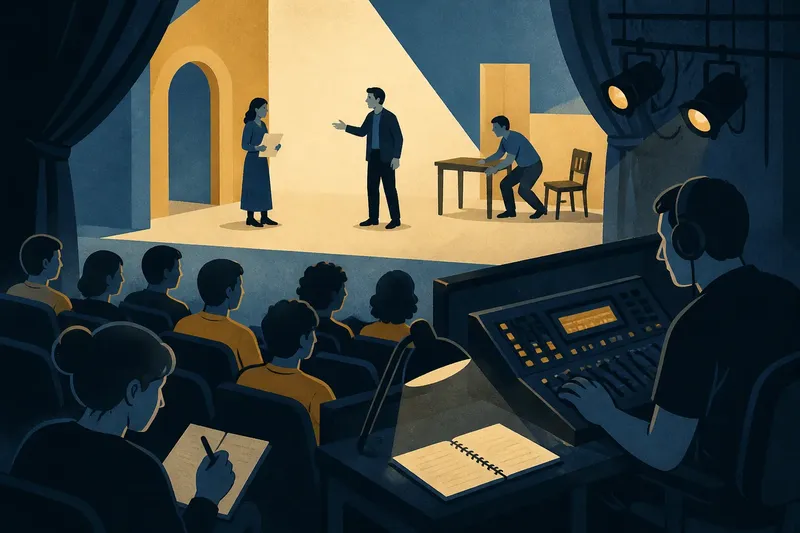
The house lights dim, a performer misses a cue, and a technician adjusts the sound. At a show preview, those moments may belong to a presentation that is still being refined. A preview is a performance for an audience, but it also gives the production a chance to observe the work before its public run is fully settled.
That combination makes context essential. Some previews are nearly complete runs; others include interruptions or unfinished sections. The label alone cannot tell you what is settled. Notice what the event is intended to reveal, describe what you actually experienced, and avoid treating temporary conditions as promises about every later performance.
What does a show preview tell you?
A show preview presents material to an audience while the production may still make changes. Depending on the event, you might see a full run, selected scenes, or a work-in-progress showing with discussion. The invitation, presenter, and any announcement at the venue can clarify which kind of preview you are attending.
A preview can reveal how the work meets an audience in that particular setting. The team may observe whether a transition is clear, whether a sound cue is easy to hear, or whether attention shifts during a scene. Audience reactions offer clues, not verdicts: a response can point to a question the team may want to examine, but it cannot explain the cause on its own.
A public performance is presented as the assembled event, although live performances still vary from night to night. A preview can look much the same, yet its purpose and context differ: the production may still be evaluating choices or adjusting elements. So the distinction is not that a preview is never a performance. It is that an audience should interpret it with its development context in mind.
How can you tell what kind of preview it is?
Check the wording on the invitation or venue page. A “dress rehearsal” may focus on running the production under show conditions. An “open rehearsal” may allow observers to watch work in progress. A “work-in-progress showing” may invite discussion, while a “preview performance” may be presented much like a public show even though changes remain possible.
These terms are not used identically by every presenter, so look for practical details: Will the event stop for notes? Is there a discussion afterward? Are some scenes or design elements unfinished? If those details are missing, ask the presenter rather than assuming the show is either fully settled or only a rehearsal.
If you are organizing a preview, tell attendees what they will see and what response would be useful. A focused question—such as whether the sequence of a scene is clear—gives people a subject to consider. If you are attending, use the invitation to decide whether the format suits what you want from the evening.
What should you notice while watching?
Keep observations separate from interpretations. “The scene change paused long enough for people to start talking” describes what happened. “The scene change is boring” describes an interpretation. Both can matter, but the observation gives the team a more specific moment to review.
Notice audience attention as well as visible reactions. Laughter, applause, and silence are signals, not complete measures of understanding. A quiet audience may be following closely; a laugh may come from surprise rather than the intended meaning. Record what happened and when, without treating one room’s reaction as a universal judgment.
Also note interruptions and explicitly unfinished elements. A performer might repeat a line, the presentation might pause for discussion, or the team might explain that a design choice is temporary. Those conditions shape what you saw. They do not erase your response, but they limit what you can infer about the finished event.
Say you attend an invented preview in which a scene ends abruptly, and the presenter says the transition is still being developed. You note the sudden ending, then mention that the next entrance had not yet been worked out. The resulting observation is specific: the scene felt abrupt in that presentation, while the unfinished transition makes it uncertain whether the same effect will remain.
How can you give feedback that helps?
Start with a specific moment and report what you understood or noticed. “I wasn’t sure who was speaking after the lights changed” is easier to examine than “That part didn’t work.” A performer might ask what an audience thought a character wanted; a production team might ask whether dialogue was audible from different parts of the room.
Distinguish preference from comprehension. You may dislike a deliberate style while understanding it clearly. Another viewer may enjoy a scene but miss its meaning. Those responses point to different questions, so feedback should help the team understand the experience rather than require the work to suit every individual taste.
Patterns can be useful, but keep the conditions in view. If several people describe the same confusing transition, the team might review its staging or sound. If one person dislikes the genre, that may reflect a difference in taste rather than a problem shared by the audience. Think of feedback like a mirror: it can show the makers an angle they missed, but it cannot decide what the work should become.
When a discussion follows the preview, invite responses before explaining the team’s intentions. People can first describe what they noticed in their own words. Context may help afterward, but an early explanation can steer their recollections toward the intended meaning.
What can you conclude from a show preview?
Can you judge the story or material?
You can describe how the material you saw made sense to you. If scenes were missing, reordered, or interrupted, make clear that your judgment applies to that version rather than to a settled whole.
Can you review a preview as a public performance?
You can describe your experience, but identify the event as a preview and separate observed conditions from expectations about later performances. Treating a visible work-in-progress element as final can give readers the wrong impression.
Does a strong audience reaction mean the show is ready?
It means something in that room prompted a response. It does not establish that every transition, technical element, or audience experience is settled; the production team must make those readiness decisions.
Can a non-expert give useful feedback?
Yes, when the team is seeking audience responses. You can report what you understood, noticed, or found unclear without prescribing a technical fix, and leave specialized judgments to the people responsible for those areas.
How should you describe the preview afterward?
Name the event as it was presented: a preview, rehearsal, or work-in-progress showing. Mention interruptions or unfinished elements that shaped your experience. If you share an opinion publicly, do not imply that a temporary choice represents the settled production unless the team has confirmed it.
For example, an attendee could say, “I saw a preview with a pause during the scene change; the story was clear to me, but I can’t tell whether that pause will remain.” That account gives readers a concrete description without claiming to predict the finished event.
When describing a show preview, separate what you saw from what remains unsettled. That distinction lets your response be candid and specific while giving other people a fair sense of the event they are considering.